
What The Ruck?
The TMO Has Left the Stadium. Is That a Good Thing?
Technology has transformed rugby officiating, but the biggest change isn't what the TMO is reviewing—it's where they're reviewing it from. As World Rugby trials a new era of remote officiating, could greater independence lead to greater trust?
There was a time when refereeing a rugby match was relatively simple. One referee. Two touch judges. Eighty minutes of decisions made in real time
Those days are long gone.
Elite rugby now operates in an environment where every tackle, every clear-out and every try can be reviewed from multiple angles within seconds. Technology has become as much a part of the modern game as the whistle itself, and with it has come the Television Match Official.
For some supporters, the TMO has improved the game beyond recognition. Dangerous play is identified more consistently, foul play is reviewed more thoroughly and referees have another set of experienced eyes to help them make difficult decisions.
For others, every intervention feels like another interruption.
Either way, the TMO isn't going anywhere.
What's changing is where they're sitting.
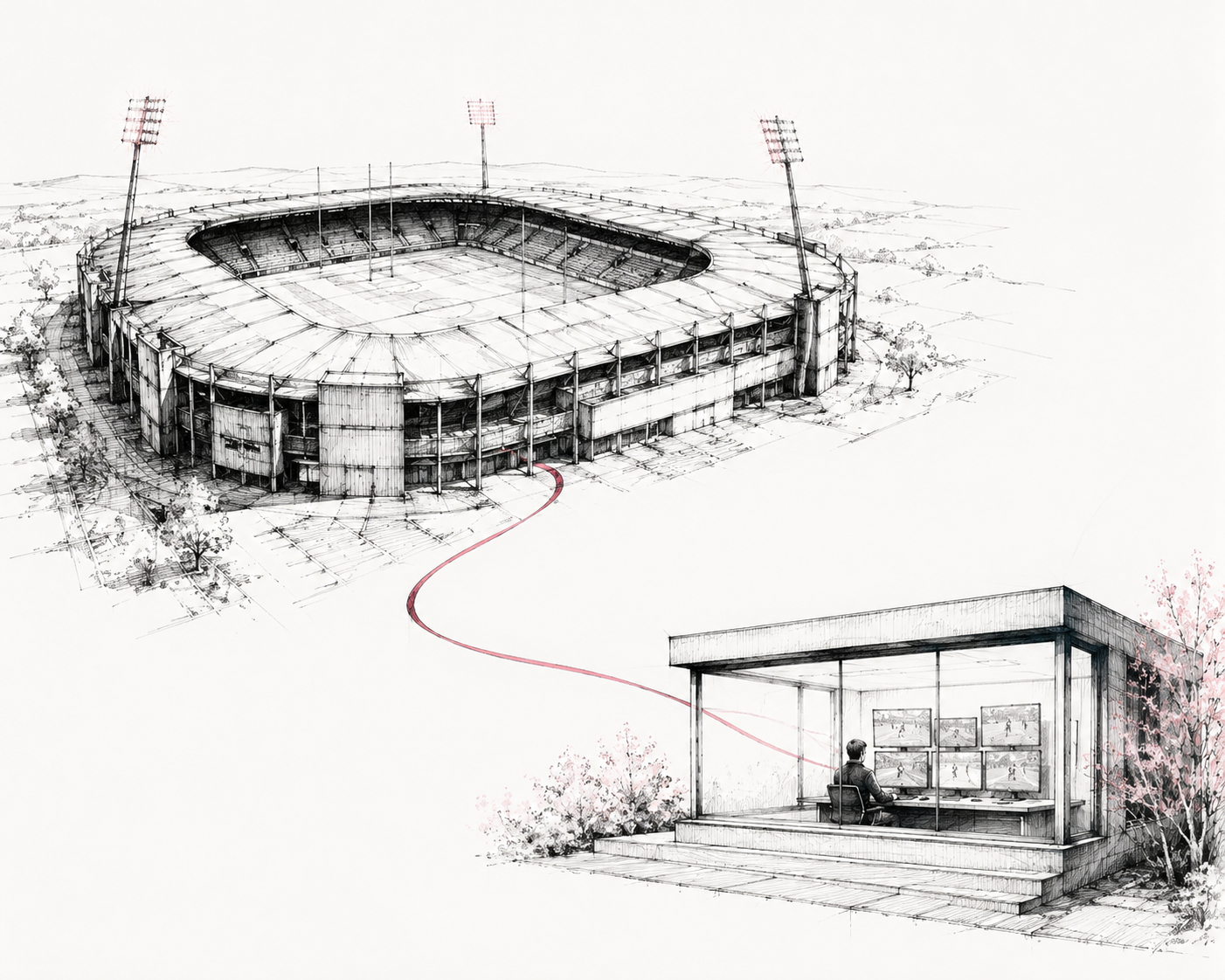
This summer, World Rugby began trialling a fully remote TMO hub during the World Rugby Nations Cup and the World Rugby U20 Championship. Rather than working from inside the stadium, Television Match Officials are based at a central operations hub in Basingstoke, reviewing incidents from hundreds of miles away with specialist technology and dedicated replay support.
It's a significant shift, one that's likely to shape the future of international rugby.
World Rugby has already confirmed that new minimum technology standards will be introduced across international rugby by August 2027. Among them is a simple but important principle: the TMO should have independent access to every available camera angle, rather than relying on the television feed produced for the broadcast.
At first glance, it sounds like a purely technical change.
In reality, it raises a much bigger question.
For years, one criticism has quietly followed almost every controversial decision.
When a referee asks to see another angle, who decides what the TMO actually sees?
“The referee isn’t looking for the most compelling replay. They’re looking for the most accurate one.”
The answer has traditionally been the host broadcaster.
Television directors are experts at telling the story of a match. Their job is to produce the best possible broadcast for viewers, selecting replays that capture the drama, emotion and pace of the game.
Officiating, however, has a different objective.
The referee isn't looking for the most compelling replay.
They're looking for the most accurate one.
Most of the time those two priorities align perfectly.
Occasionally, they don't.
We've all experienced those moments when commentators ask for another angle, social media becomes convinced that footage exists somewhere, or everyone in the stadium is left wondering whether the decisive replay was ever shown.
That's not necessarily anyone's fault. Television broadcasts are designed to entertain millions of viewers, not to function as forensic review systems.
By separating the TMO from the live television production, World Rugby hopes to create something more independent.
Officials can review every available camera angle, control replays themselves and apply the same procedures regardless of which broadcaster is covering the match.
Perhaps that's the real story here.
This isn't simply about moving someone from a room inside the stadium to one many miles away.
It's about separating officiating from broadcasting.
In an era where every decision is scrutinised frame by frame, trust in the process matters just as much as the decision itself.
Will it eliminate controversy?
Almost certainly not.
Rugby will always have moments that divide opinion. Slow-motion replays won't remove human judgement, and supporters will probably never agree on every decision.
That's part of the game's DNA.
But if independent replay technology leads to more consistent decisions, greater transparency and increased confidence that every available angle has been reviewed, then it's difficult to argue the game hasn't taken a step forward.
The biggest change isn't that the TMO has left the stadium.
It's that, for the first time, the replay official is beginning to step outside the television production too.
And that might prove to be the most important decision of all.
Issue Context
World Rugby's fully remote TMO hub was first trialled during the 2026 World Rugby Nations Cup and World Rugby U20 Championship. Wider minimum technology standards for international rugby, including independent TMO access to all available camera angles, are due to be introduced by August 2027.