

Before We Begin
Issue 02 is about the moments that don't make the match report. Welcome back.
Someone, somewhere, is always keeping count.
But ask a rugby player what they actually remember — not the results, the real memories — and the answers are rarely about any of that.
They remember the person who drove them home after their first match and talked the whole way so they wouldn't notice they were nervous. The away trip that became legendary before anyone got home. The post-match conversation that started about nothing and ended somewhere completely unexpected.
The stuff that doesn't make the match report.
That's what this issue is about.
More Than Matchday is our attempt to get underneath the game. To explore the friendships, rituals and quiet moments that sit around rugby rather than inside it. The communities built on cold Tuesday evenings in places nobody has heard of. The belonging that grows, slowly and stubbornly, out of shared effort and shared absurdity and the simple act of showing up week after week.
Women's rugby is growing. The crowds are bigger. More people are paying attention. The game is finally getting some of the attention it has always deserved. All of that matters enormously.
But the heart of the game has always been somewhere else. In the changing room before kick-off. In the car park afterwards when nobody quite wants to go home yet. In the WhatsApp group that has somehow become the primary social infrastructure of six women's lives.
That's where XV Style lives. In the moments beyond the scoreline.
Welcome back.

Talking Rugby
77,120 people. Round One.
The first Saturday in April.
The 2026 Women's Six Nations was full of those moments.
Eight. And Counting.

“The 2026 Women’s Six Nations wasn’t just another England title. It was proof that something fundamental has changed about this sport. And this time, the whole world was watching.”
The Numbers That Changed Everything
There is a moment, somewhere in the middle of a sporting revolution, when the numbers stop being statistics and start being statements
.
The 2026 Women's Six Nations was full of those moments.
77,120 people filed into Allianz Stadium in Twickenham for England against Ireland on the opening weekend. Not a sold-out final. Not a World Cup decider. Round One. The first Saturday in April. And still, 77,120 people came.
That figure shattered the previous Women's Six Nations attendance record by more than 18,000. It wasn't a small increase. It wasn't incremental growth. It was a signal.
By the time the tournament ended five weeks later, the 2026 Women's Six Nations had averaged 18,000 fans per game — an 84% increase on 2025. Total attendance across the championship reached 194,466, surpassing the previous full tournament record before the final round had even been played.
For the first time in their history, both Ireland and Scotland broke the 30,000 fan ceiling. Murrayfield hosted its first Women's Six Nations match and 30,498 turned up — a national record for a standalone women's sporting event in Scotland, breaking a record set by the Scotland women's football team just seven years ago. In Dublin, the Aviva Stadium opened its doors to Irish women's rugby for the first time. They came in their thousands.
Five nations set national or tournament attendance records during a single championship.
This is not a niche sport finding its feet. This is a sport arriving.
The Team Behind The Title
England won their eighth consecutive Women's Six Nations title. Their fifth Grand Slam in a row. Their 38th consecutive match without defeat.
At some point the records become almost impossible to contextualise. So instead of more numbers, consider the people behind them.
Consider Amy Cokayne. The Sale hooker — RAF background, ferocious work rate, the kind of player who seems to find turnovers the way other people find loose change — was at the heart of everything England did in 2026. Six tries, the second highest tally in the entire championship. Seven turnovers, joint highest of any player in the tournament. And a lineout completion rate of 97.9% — the highest of any hooker in the competition. That last figure is almost offensive. In a tournament where set piece accuracy can decide matches, Cokayne was operating at a level that made the lineout look easy.
It wasn't easy. It never is.
Then there is Zoe Harrison. The Saracens fly-half kicked at 94% accuracy across the tournament — a figure that reflects not just technical skill but composure under pressure. When England needed points, she delivered them. When England needed field position, she found it. The quiet engine in a team of visible stars.
And Ellie Kildunne. Still unstoppable. Still the player on the cover of Issue 01. Still the first name opposition coaches write on their tactical whiteboards.
Bordeaux. That First Half.
There are matches that reveal something true about a team. The Grand Slam decider in Bordeaux on May 17th was one of them.
France had prepared carefully and deliberately. Head coach François Ratier made just two changes to his starting XV, prioritising cohesion and familiarity. England, by contrast, made seven alterations — some enforced by injury, some tactical. On paper, before kick-off, France had the more settled team. They had home advantage. They had a crowd behind them. They had everything except the habit of winning.
The opening ten minutes belonged to France.
England were ill-disciplined, conceding territory and inviting pressure. France found space out wide through the blistering pace of winger Léa Murie. When loosehead Ambre Mwayembe stripped the ball cleanly from Mackenzie Carson in the English 22, Murie broke clear and timed her inside pass perfectly for scrum-half Pauline Bourdon Sansus to coast under the posts. Carla Arbez converted. France led 7-0.
In a Bordeaux crowd of thousands, it must have felt like a beginning.
England had other ideas.
What followed in the next thirty minutes was a masterclass in the clinical efficiency that has made this team almost impossible to beat. England didn't panic. They didn't restructure. They simply waited for France to give them something, and when France did, they took it.
First it was a heavy midfield exchange that gave Amy Cokayne the platform to drag England to the line, before Sarah Bern showed the full force of her considerable self to crash over. Harrison converted. 7-7.
Then France made an unforced handling error in midfield — the kind of mistake that changes matches. Claudia Moloney-MacDonald and Megan Jones hacked the bouncing ball forward into space and Ellie Kildunne gathered cleanly and touched down under the posts. England led 14-7 and France, despite their composure, had not yet worked out how to stop it.
With the half closing in, England won a scrum penalty deep in French territory. Their rolling maul was halted but England had the presence of mind to shift the ball wide, and Jess Breach — as she so often does — finished in the corner under pressure. Harrison's conversion from the touchline was marvellous. 21-7.
Then, in the final play before half time, Helena Rowland found Kildunne with a long miss-pass that dissected the French defence. Her second of the afternoon. Her composure in taking it as if time had slowed down around her.
England went in at half time leading 26-7.
They had been behind. They had been under pressure. They had been in France, in front of a crowd that desperately wanted a different outcome.
And they had scored four tries in thirty minutes.
More Than The Red Roses
This is an England story. Of course it is. Eight titles in a row demands to be told.
But the 2026 Women's Six Nations was also something else — a tournament in which the whole competition grew.
Ireland broke records at the Aviva Stadium. Scotland broke records at Murrayfield. France pushed England to the edge of a Grand Slam in Bordeaux in a match that finished 43-28 but felt closer than that for long periods. Wales drew 500,000 viewers on BBC Two for their match against England — a national record.
The competition is not just England and the rest. It is becoming something richer, something more contested, something that can fill the Aviva for the first time and sell out Murrayfield and send 77,120 people to Twickenham on an April afternoon.
The game is changing. It has been changing for years.
In 2026, it changed in front of more people than ever before.
Eight titles. Five consecutive Grand Slams. Thirty-eight matches unbeaten. The Red Roses keep writing history.
The rest of the game is catching up.
Good.

In Profile
The whistle, the pressure and seeing the game differently.
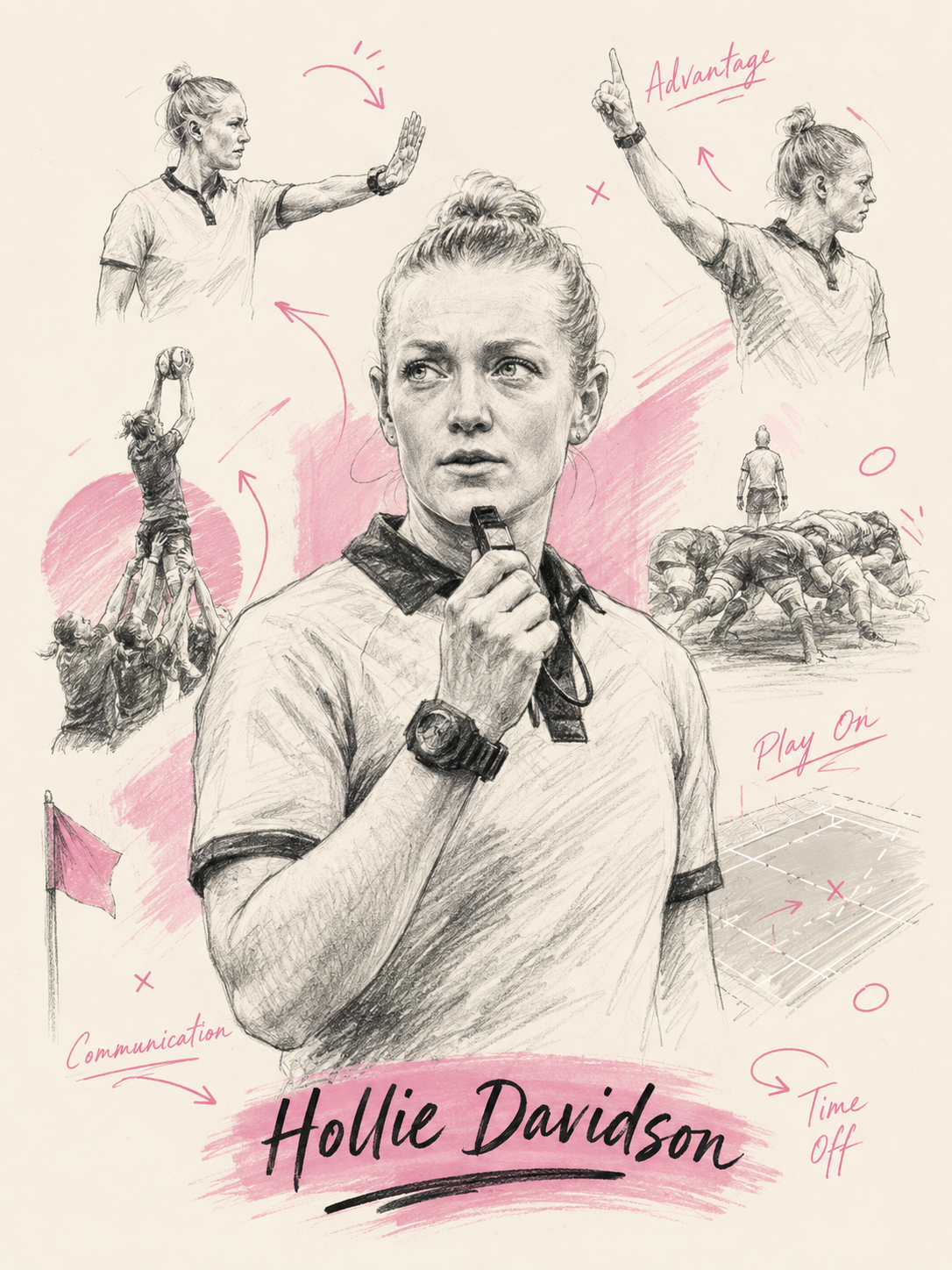
A profile of Hollie Davidson — referee, and trailblazer.
Hollie Davidson

The whistle, the pressure and seeing the game differently.
The stadium falls quiet for a moment.
Not silent. Rugby stadiums are never silent. There are still conversations in the crowd, still movement in the stands, still players making final adjustments before kick-off. But there is a moment, just before the game begins, when thousands of people collectively hold their breath.
Most eyes are on the players.
Few are looking at the referee.
That's probably how Hollie Davidson likes it.
Because while much of modern sport is built around personalities, profiles and headlines, refereeing remains one of rugby's most unusual jobs. If you've done it perfectly, people barely notice. If you've made a mistake, everyone notices.
And yet Davidson keeps walking into the middle of some of the biggest rugby matches in the world.
The story could easily be told through milestones.
First woman to referee a men's Six Nations match — and before that, the first female assistant referee in the same competition.
First woman to referee a European professional final.
First woman to referee matches involving the All Blacks and Springboks.
Referee of two Women's Rugby World Cup finals.
World Rugby Referee Award recipient.
Inducted into the Scottish Rugby Hall of Fame (2025).
It's an impressive list.
But milestones rarely tell the whole story.
“Few are looking at the referee. That’s probably how Hollie Davidson likes it.”
What makes Davidson interesting isn't simply where she's ended up. It's how she got there.
Long before she became one of the most recognisable referees in world rugby, Davidson was a player.
A scrum-half.
The sort of player she once described as a "yappy little terrier".
She represented Scotland at Under-20 level and looked set for a future in the game. Then came injury. Called up to the senior Scotland squad, Davidson dislocated her shoulder in a practice game the week before her first cap. Two surgeries followed. One path ended before it had properly begun.
For many players, that's where the story ends.
Rugby becomes something they used to do.
Something they occasionally miss.
Something they talk about in the past tense.
For Davidson, it became the beginning of something else.
One of the themes that appears repeatedly throughout rugby is that people rarely stay for the reasons they expect.
Players join because they want to play.
Years later they find themselves coaching.
Or volunteering.
Or organising tours.
Or standing in the middle with a whistle.
The game has a habit of keeping people around.
Davidson found refereeing almost by accident. What started as a way to remain involved gradually became something bigger. In 2017 she left a career in banking, taking a significant pay cut to become Scotland's first full-time professional female referee.
At the time, it looked like a gamble.
Looking back now, it looks like the moment everything changed.
Rugby referees occupy a strange space.
They are central to every match yet rarely the focus of it.
The best officials combine authority with communication, confidence with humility, decisiveness with calm. They have to manage pressure, criticism and occasionally thousands of people who disagree with them simultaneously.
Davidson seems unusually comfortable in that environment.
Players and coaches frequently talk about her communication. Her ability to explain decisions. Her calmness in difficult moments. Her willingness to make big calls when the game demands it.
Those qualities have taken her from local club grounds to the biggest stages in rugby.
Not overnight.
Not without setbacks.
And certainly not without criticism.
Early in her refereeing career, Davidson often arrived at clubs where people assumed she couldn't possibly be the referee.
Some thought she was a physio.
Others questioned whether a woman could keep up with the men's game.
There were comments from touchlines.
Doubts.
Assumptions.
The usual collection of obstacles that tend to appear whenever somebody is first through a particular door.
The remarkable thing is how quickly those conversations disappear once the whistle blows.
Because rugby players ultimately care about one thing.
Can you referee?
Davidson could.
And increasingly, she was doing it at levels where nobody could ignore it.
Today her CV includes World Cups, Six Nations fixtures, international test matches and professional finals.
She has officiated in front of packed stadiums and global audiences. She has become one of the most respected referees in the game.
Yet there is something refreshing about the way she talks about rugby.
Not as a trailblazer.
Not as a pioneer.
Simply as somebody who loves the sport.
The same sport she watched as a child.
The same sport she played.
The same sport she found a way back into when playing was no longer possible.
Perhaps that's the lesson hidden inside her story.
Rugby doesn't always give us the journey we expected.
Sometimes the playing career ends too early.
Sometimes the role changes.
Sometimes the dream evolves into something different.
But for those who stay involved, the game has an extraordinary ability to open unexpected doors.
Davidson walked through one carrying a whistle.
The rest is history.
More Than Matchday
The friendships, rituals and moments that make rugby impossible to leave behind.
Cover Feature
The friendships, rituals and moments that make rugby impossible to leave behind.
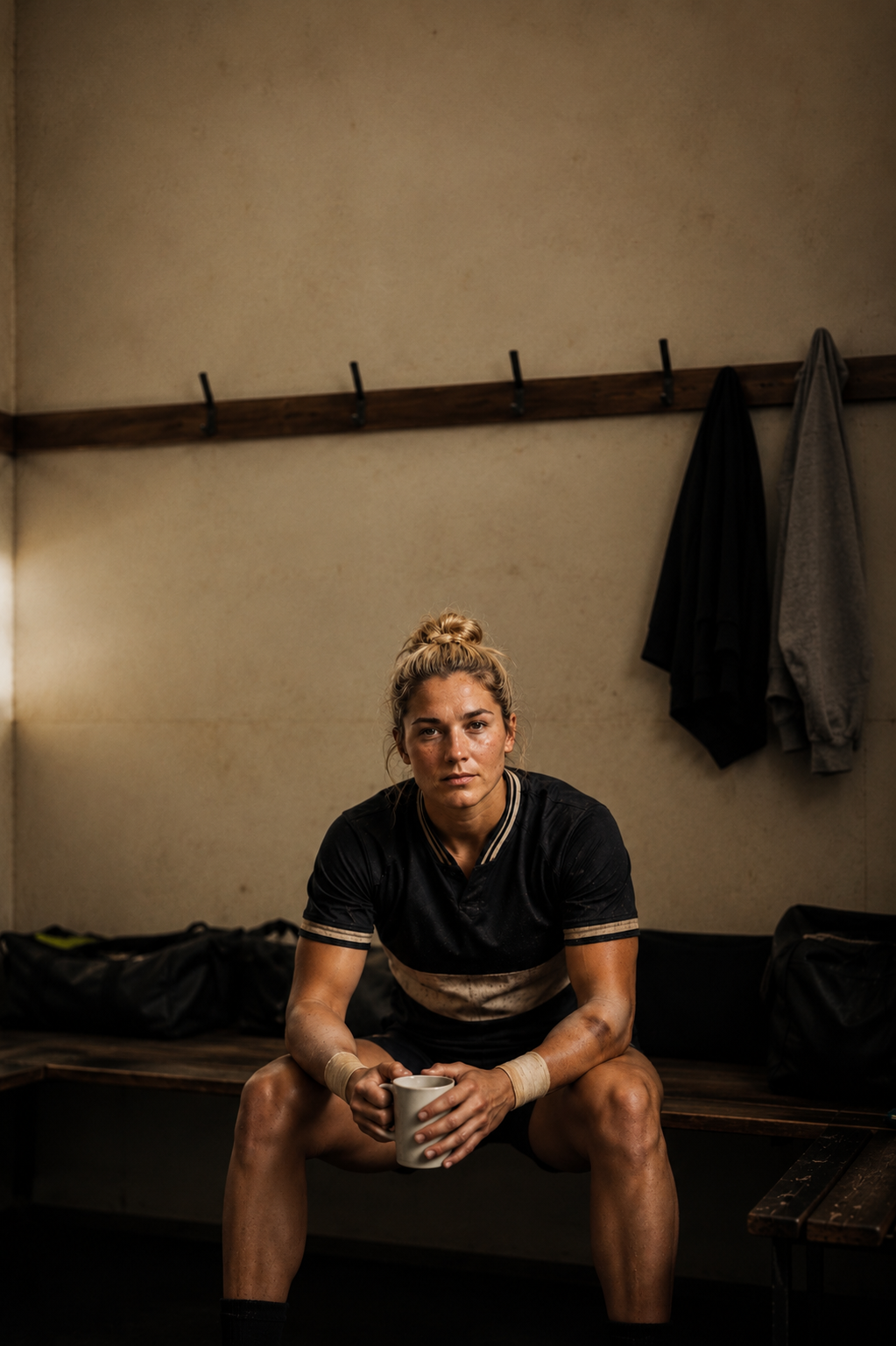
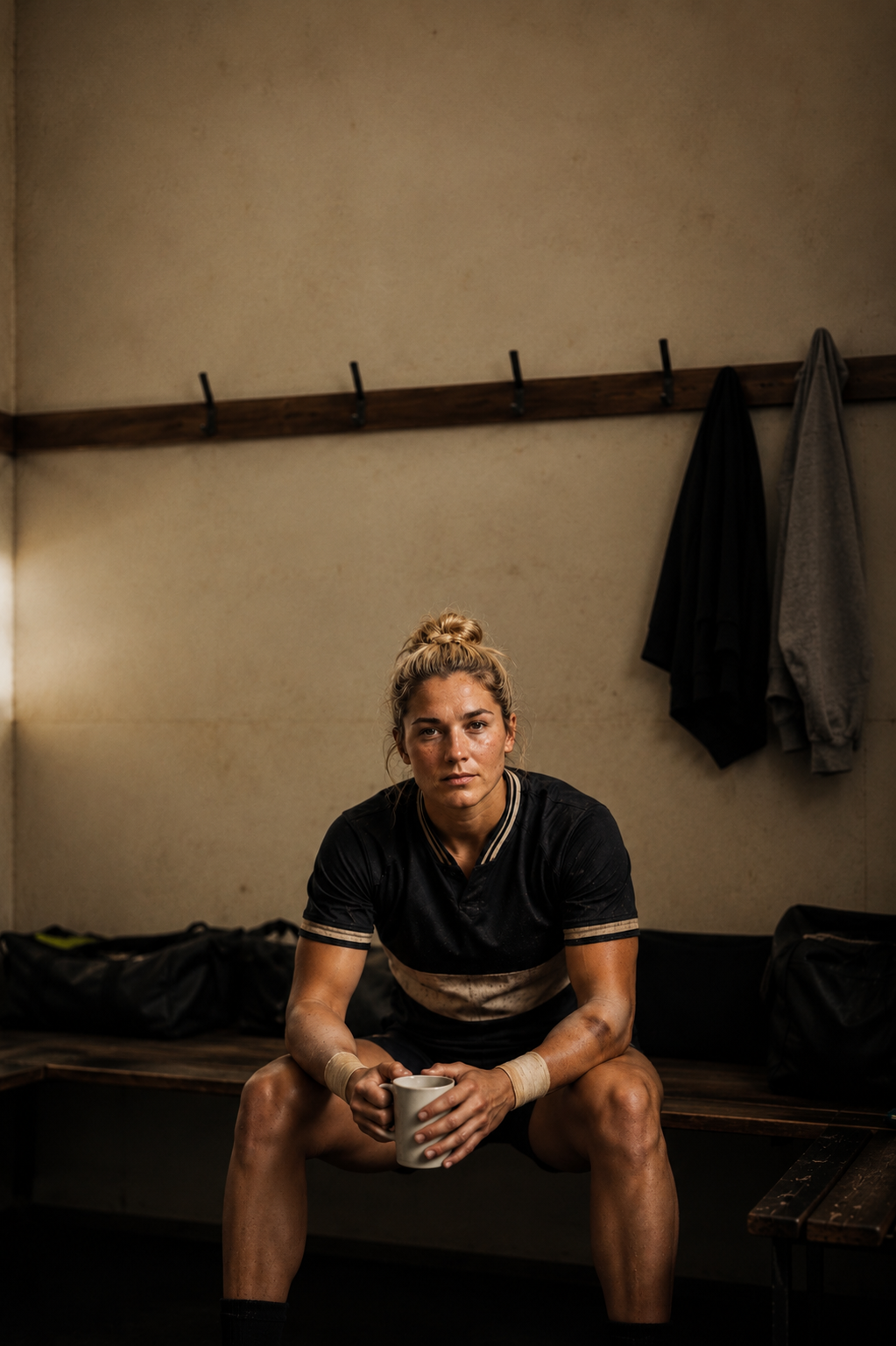
Nobody remembers the score from three seasons ago. Nobody can tell you the exact date of the match, or who kicked the conversion, or what the weather was doing in the second half. But ask any rugby player about that season and something else surfaces immediately. The away trip where the minibus broke down outside Coventry. The teammate who always brought the wrong boots. The post-match curry that turned into a four-hour conversation about everything except rugby
The stuff that doesn't make the match report. The stuff that makes it impossible to leave..
Nobody Stays For The Tries
There's a version of women's rugby that exists in highlight reels and Six Nations coverage. Big crowds. Big moments. Players you recognise from billboards and breakfast television. It's real, and it matters, and it's something women's rugby has earned after decades of being treated as an afterthought.
But that's not why most women play.
Ask a grassroots player why she started and the answer is usually simple. A friend dragged her along. A university freshers' fair. A moment of curiosity that turned into a Tuesday evening, then a Sunday morning, then somehow the whole weekend.
Ask her why she stayed and the answer gets harder to explain.
It's not the tries. It's not the trophies. Most clubs at grassroots level aren't winning leagues or producing internationals. The pitches are sometimes questionable. The changing rooms have seen better decades.
And yet the retention rate in women's rugby is remarkable. Players who come for a season stay for ten. Women who joined knowing nothing become coaches, referees, committee members, the person who drives the minibus and still somehow makes it to work on Monday morning.
Something is keeping them there. And it isn't the tries.

“Rugby builds a community that looks, from the outside, like sport.”
The Things We Don’t Put In The Team Photo
The team photo captures fifteen players in a line. Shirts tucked in. Someone squinting into the sun. The coach looking slightly uncertain about what to do with their hands.
What it doesn't capture is everything else.
The WhatsApp group that has been active since 2019 and has somehow become the primary social infrastructure of at least six women's lives. The car journey to an away fixture that turned into an impromptu life coaching session at sixty miles an hour on the M6. The player who started coming to training after a difficult year and didn't say much for three months and then one Tuesday evening laughed so hard that something quietly shifted.
Rugby builds community that looks, from the outside, like sport. From the inside it's something else entirely. It's the coffee after training that runs forty minutes longer than anyone planned. The away trip tradition that cannot be explained to anyone who wasn't there and doesn't need to be because everyone who was there already knows.
These are the invisible parts of rugby. They don't appear in league tables or match reports. They exist in the spaces between the game.
They are, quietly, the whole point.
THE THINGS EVERY RUGBY PLAYER KNOWS
One player joined planning to stay six weeks. Eight years later she is club secretary, vice-captain, and owns three waterproof jackets she doesn't remember buying.
Your kit bag contains at least one mystery item.
Somebody else's boots live in your car.
The WhatsApp group is legally binding.
The post-match chips matter.
Athletic tape reproduces when left unattended.
You've explained offside. Nobody understood.
You tried again.
The Quiet Moments
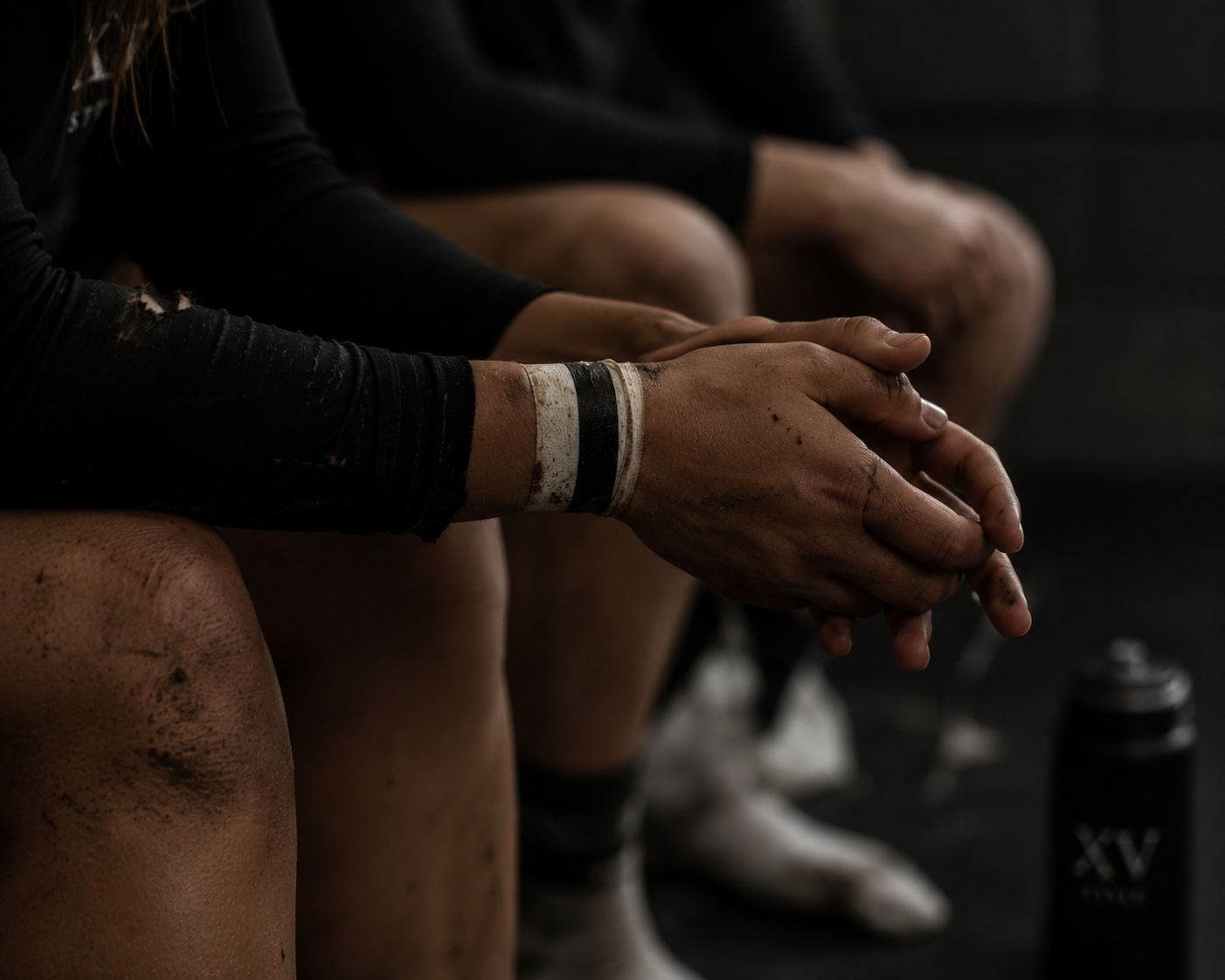
Taped wrists before a match. The specific weight of a gumshield in a shorts pocket. Boots left by the door still carrying last Sunday's mud.
Rugby has a texture that exists outside the ninety minutes. It lives in the small rituals that accumulate over seasons until they become as familiar as anything else in a week. The Wednesday evening drive to training. The particular silence of a changing room ten minutes before kick-off. The first coffee afterwards when everything aches pleasantly and nobody is in any hurry.
These are the moments that don't photograph easily and don't translate well into words but exist, vividly, in the memory of anyone who has played for long enough.
This is the texture of rugby life. Not the scoreboard. Not the league table. The quiet, ordinary, irreplaceable texture of showing up week after week for something that matters more than it probably should.

“Most matches are forgotten. The people don’t fade.”
Why We Stay
Nobody stays because of the weather. November in England is not a compelling argument for outdoor sport. Nor is the cost, which is real. Nor the time commitment, which somehow expands to fill whatever space is available until rugby is no longer something you do but something you are.
And yet people stay. Through injuries and moves and new jobs and difficult seasons. Through years when everything clicks and years when it all falls apart. They stay when it would be entirely reasonable to stop.
Why?
The honest answer, given enough time and enough post-match honesty, tends to sound like this.
Because I found my people.
It sounds simple. It is simple. Women's rugby has a particular gift for producing communities that feel, from the first session, like somewhere you were supposed to end up. There is something about the shared physical effort, the shared vulnerability of learning something new, the shared absurdity of the whole endeavour that creates intimacy quickly. You cannot be guarded and play rugby. The game requires too much of you for that.
What grows in that space is something that doesn't have a clean name. Belonging, maybe. The particular belonging that comes from being known, properly known, by people who have seen you at your least composed and most muddy and still saved you a seat at the table afterwards.
That's why we stay. Not for the tries. Not for the trophies. For the person who texts to check you're okay after a hard match. For the Tuesday evening when you didn't want to go and went anyway and came home feeling, inexplicably, like yourself again.
Rugby gives women a lot of things. But the thing it gives most reliably, most stubbornly, across decades and divisions and all the variables of a sporting life, is this.
A place to belong.

The Final Whistle
Most matches are forgotten. The scores fade, the seasons blur, the league tables change.
The people don't fade.
The woman who drove you home after your first match. The teammate who has played through things that would have stopped most people and keeps turning up anyway. The coach who saw something in you before you saw it yourself.
Women's rugby is growing. The stadiums are filling, the players are becoming the household names the sport has always deserved. All of that matters.
But the heart of the game has always been here. In the quiet moments before kick-off and the long evenings after. In the communities built on cold Tuesday nights in places nobody has heard of. In the stubborn, joyful, completely irrational decision to keep showing up.
More than matchday.
That's what this has always been.
— XV Editor
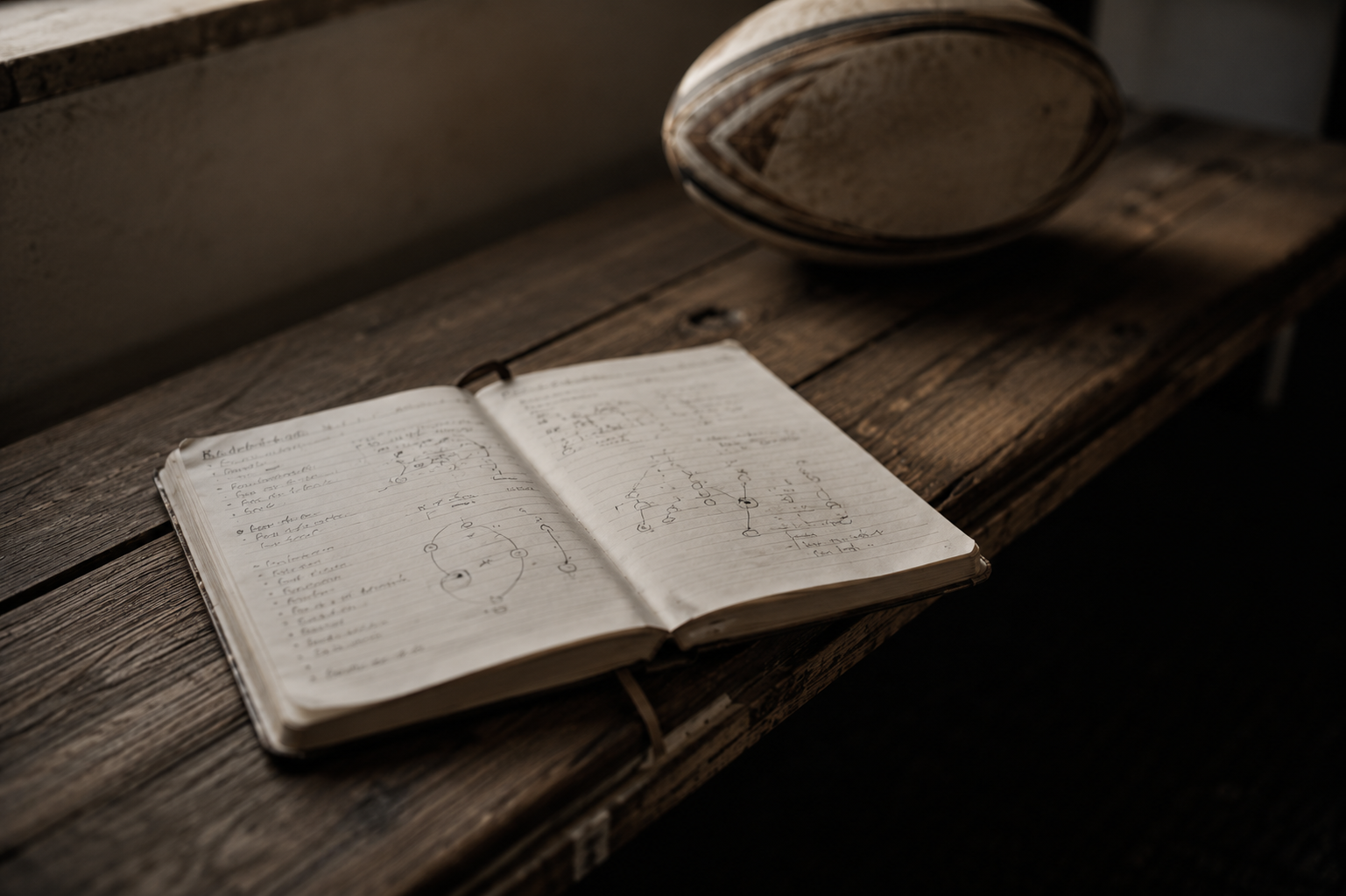

What The Ruck?
The group chats, the characters, the 247 unread messages. A love letter to the WhatsApp groups that run women's rugby.
Is The WhatsApp Group The New Clubhouse?

Every rugby club has one
Actually, every rugby club has seven.
The First XV Group. The Women's Squad Group. The Committee Group. The Committee Group (Actual Important Stuff). The Tour Group. The Tour Group (No Coaches). The Tour Group (Definitely No Coaches).
And somehow, despite all of this, nobody knows what time kick-off is.
At some point, without anybody officially agreeing to it, the rugby clubhouse moved into a WhatsApp group.
The bar is still there. The chairs are still there. The suspiciously sticky table in the corner is almost certainly still there.
But the real conversation now happens on a screen. Twenty-four hours a day. Seven days a week. With notifications permanently muted.
247 UNREAD MESSAGES
Nobody knows how it happens.
You open your phone at 9:14am. Three unread messages. Manageable.
You attend a meeting. Buy a coffee. Reply to one email.
Suddenly it's 11:32am. The group has generated 247 new messages.
You have missed:
Two lift requests
Four training updates
A discussion about post-match food
Three GIFs
One argument about whether the tour theme should be pirates
A photo of somebody's dog
The original message has vanished forever. Nobody will ever find it again.
THE MODERN CLUB NOTICEBOARD
There was a time when rugby information lived on a clubhouse wall. Fixture posters. Social event flyers. Training times.
Now all of it arrives through WhatsApp. And disappears approximately six seconds later beneath a debate about who forgot the match balls.
The modern rugby player receives information through a process best described as archaeological. You don't read messages. You excavate them.
THE GROUP CHAT CHARACTERS
Every club has them.
The React-Only Member Never writes anything. Hasn't spoken since 2022. Responds exclusively with 👍. Nobody knows if they're still playing.
The Accidental Comedian Attempts to be serious. Posts something unintentionally hilarious. Creates six hours of chaos.
The Voice Note Criminal Could have typed twelve words. Instead sends a four-minute voice note recorded while driving. Nobody listens. Everyone pretends they did.
The Fixture Secretary Posts genuinely important information. Receives three reactions. Immediately buried beneath a GIF. Posts the same information again.
The Admin The closest thing rugby has to a dictator. Can remove you from the group. Knows this.
THE DIGITAL CHANGING ROOM
The strange thing is that WhatsApp isn't replacing rugby culture. It's becoming rugby culture.
The group chat has quietly inherited the jobs once performed by the clubhouse. It organises lifts. Starts friendships. Creates inside jokes. Checks on injured players. Celebrates wins. Supports people through losses that have nothing to do with rugby.
It's where teams become communities.
“Half of modern rugby culture now exists between two green ticks.”
THE MESSAGE YOU WERE LOOKING FOR
We've all done it.
You know there was an important message. You definitely saw it. Somewhere. Last week. Possibly.
You scroll. And scroll. And scroll.
You accidentally revisit a conversation about Christmas fancy dress from fourteen months ago. The message remains lost.
Some things are simply gone forever. Like socks in a washing machine. Or your dignity after tour.
“The game lasts eighty minutes. The group chat lasts all year.”
THE REAL QUESTION
Is the WhatsApp group annoying? Occasionally. Overwhelming? Frequently. Muted? Almost certainly.
But remove it tomorrow and most clubs would immediately feel the difference.
Because beneath the GIFs, polls, reminders and endless debates about who is bringing oranges, something important is happening.
People are staying connected.
The game lasts eighty minutes. The group chat lasts all year.
And for many players, that's where rugby really lives now. Not in the clubhouse. Not on the pitch. But somewhere between a fixture reminder, a photo of somebody's dog and 247 unread messages.
COMING IN ISSUE 03 — Who's Running The Club?
The volunteers, organisers, coaches and club heroes holding grassroots rugby together. We want to hear about yours.
hello@xvstyle.co.uk
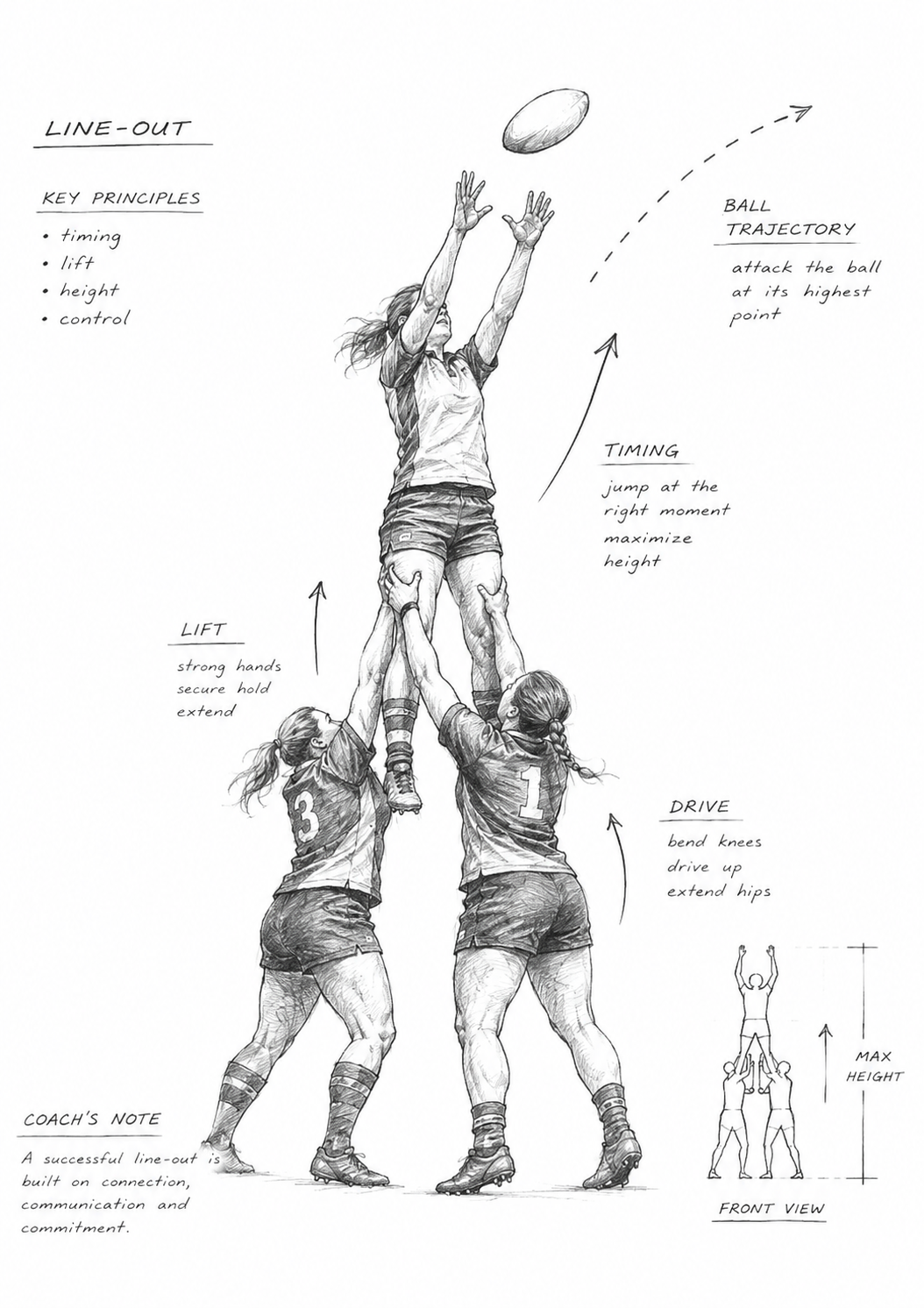
XV IQ — The Anatomy of a Line-Out
The line-out is one of rugby's most complex set pieces. Here's how it works — and why it matters.
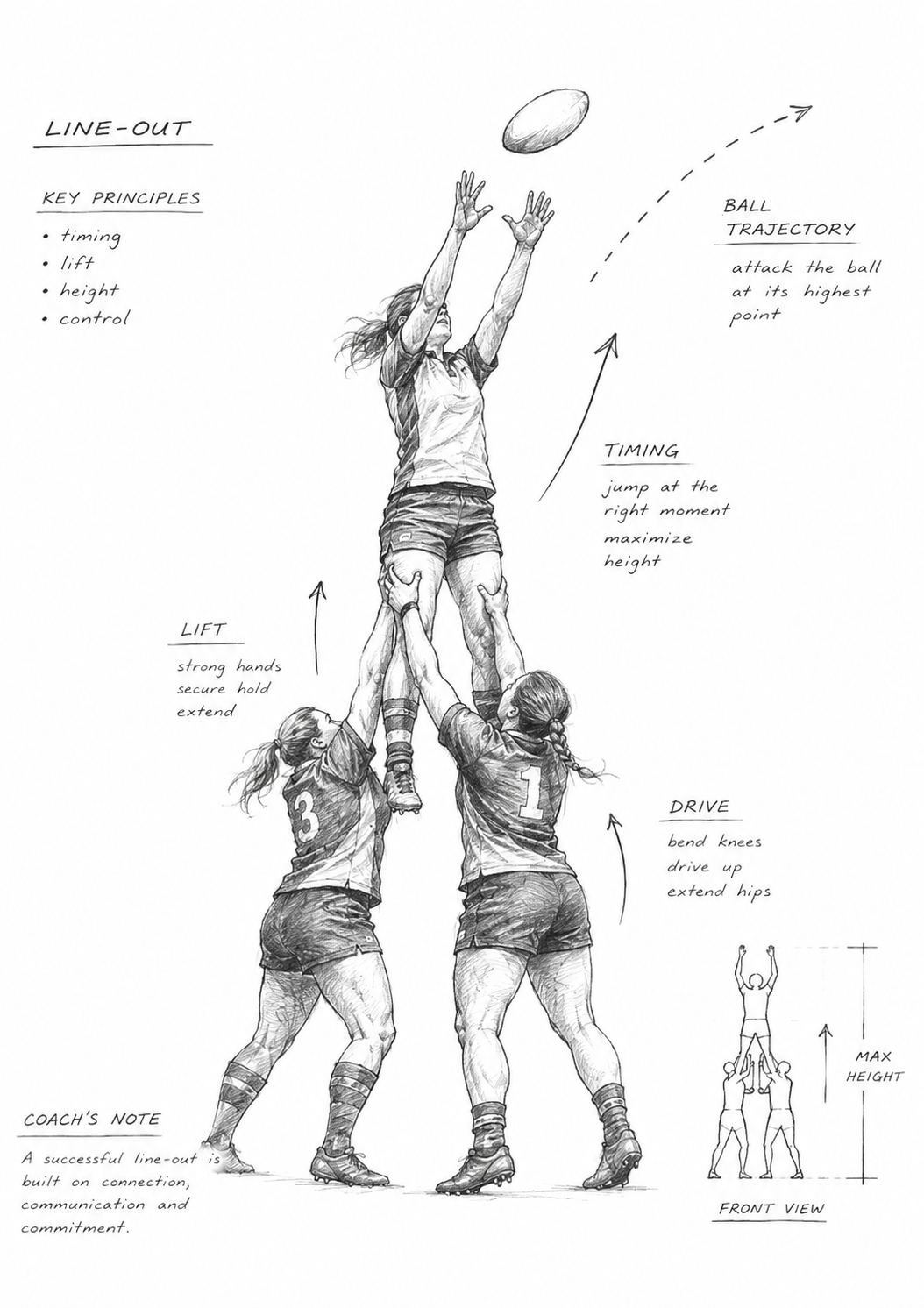
Timing. Lift. Height. Control. Four words that make it sound simple. It isn't.
What is it, exactly?
A line-out is how play restarts after the ball has gone out of bounds. In most situations, the team that did not put the ball into touch gets the throw — which means they also, in theory, control what happens next. That's the first thing worth understanding: the throwing team should win their own lineout. When they don't, something has gone wrong.
The line-out can involve anywhere from two players to the entire forward pack on each side. How many players take part, and where they stand, is a tactical decision made before the throw — and it's one the opposition is desperately trying to decode.
The Roles
Every line-out has the same core cast.
The hooker throws. She stands outside the field of play, ball in hand, and must deliver it straight down the middle of the gap between the two lines. The throw has to travel at least five metres before anyone can catch it. It sounds straightforward. It isn't. The hooker has just come out of a scrum or a tackle, her hands may be cold or muddy, and she has to throw with both accuracy and timing — because the jumper isn't standing still waiting for it.
The jumper — usually a lock, chosen for height and aerial ability — is the target. She doesn't simply wait for the ball to arrive; she times her jump to meet it at its highest point, attacking it rather than receiving it. The difference between those two things is the difference between clean possession and a fumble.
The lifters — typically two forwards, one front and one back — make the whole thing possible. They grip the jumper securely around the shorts and lower body and drive her upward explosively, fingers locked, arms extending fully, finishing on their toes to generate every centimetre of height. They hold her there until the ball is secured, then bring her safely back to ground. It takes strength, timing, and complete trust.
And then there's the caller — often one of the jumpers — whose job is to read the opposition's setup and communicate the plan before the throw. A short call, made quickly, so the defence has as little time as possible to react.
The Call
This is where it gets interesting.
Line-out calls are coded. A word, a number, a signal — something that tells your own team which jumper is going at which position, and when. To the opposition, it should mean nothing. Teams build their own calling systems in training, layering in dummy movements, delayed jumps, and false signals to keep defenders guessing.
The defence is doing exactly the same thing in reverse — watching body language, reading the formation, trying to anticipate where the ball is going before it's thrown. The best defensive line-out players have become specialists in that reading, tracking their opposite number, contesting in the air, or simply disrupting the lift.
“It’s competitive code-breaking, happening in real time, under physical pressure, in less than two seconds”
When It Goes Wrong
A mistimed lift. A throw that drifts. A call that breaks under pressure. The line-out is one of the few moments in rugby where failure is immediate, visible, and unambiguous. The ball hits the floor, or it goes to the wrong player, or nobody at all.
For the hooker, it's perhaps the loneliest skill in the game. She stands apart from both teams, making a decision that the entire structure depends on. One degree of drift and all the preparation counts for nothing.
When It Goes Right
When the call is clean, the lift explosive, and the jumper rises at precisely the moment the ball arrives — claiming it above a flailing opponent — there is a precision to it that is almost architectural.
Eight players becoming one structure, briefly, perfectly, and then dissolving back into the chaos of open play.
That's what you're watching when you watch a line-out. Not a pause in the game. The game, at its most precise.
XV IQ appears in every issue of XV Style — breaking down the moments, moves and mechanics that make rugby the game we love.
“DID YOU KNOW?
Any player can throw the ball into the line-out — it doesn’t have to be the hooker. At professional level it almost always is, but the laws place no restriction on who takes the throw.”
“RULE CHANGE
In force from January 2025
If the defending team chooses not to contest the throw, play continues even if the throw is not perfectly straight. Teams must also form the line-out within 30 seconds. The aim: faster, cleaner rugby.”
“BY THE NUMBERS
Elite hookers regularly achieve line-out success rates above 90%, making the line-out one of the most important set-piece contests in modern rugby. At grassroots level, consistent clean ball from your own throws is a genuine competitive advantage.”

Dear Gilbert
Rugby problems. Honest answers. Mostly.
Questions, dilemmas and occasional rugby-related chaos
Gilbert reads every letter — probably.

The letters. The advice. Make of it what you will.
-
Our coach clearly has favourites. The same players start every week. The same players get praised. The same players seem able to make mistakes without consequences. Meanwhile, the rest of us spend Saturday wondering whether we're actually competing for a place or just making up the numbers. Before you ask, yes, I am currently on the bench. Am I being unreasonable?
Dear Bench Warmer.
Probably.
But here's something your coach understands that you don't yet.
This is a 23-player game. The starting XV sets it up. The finishers win it. Nobody calls them substitutes anymore. There's a reason for that. You have two choices. Spend the season resenting the starting XV. Or become the player your coach sends on at sixty minutes specifically to ruin somebody else's afternoon. One of those options requires considerably less energy.
— Gilbert -
My partner doesn't play rugby and I don't think she understands why it takes over my life. Training twice a week. Matches on Sundays. Team socials. Endless WhatsApp messages. Apparently every story I tell now starts with, "One of the girls from rugby..." Last week she asked why I couldn't just treat it like a normal hobby. I didn't have an answer. Why does rugby become such a big thing?
Dear All or Nothing
Because it isn't a hobby.
Knitting is a hobby.
Collecting stamps is a hobby.
Rugby is an administrative condition that gradually acquires complete control of your calendar.
Your partner is looking at the hours.
You are looking at the people.
That's the difference.
The problem is that rugby players are terrible at explaining this. Ask one why they keep turning up and they'll start talking about line-outs before wandering off entirely.
Try telling the truth.
You like the game.
You love the people.
And occasionally you'd quite like a weekend that doesn't involve driving to somewhere called Market Deeping in the rain.
That's usually enough.
— Gilbert
-
My best friend and I play on the same team. Three months ago we had an argument. Neither of us has apologised. We still train together twice a week. We still stand next to each other during drills. We still travel to away games. We just don't really speak. At this point I'm not even sure what we're angry about anymore. Any advice?
Dear Stubborn.Yes.
Grow up.
You've managed to turn a disagreement into a long-term infrastructure project.
Three months.
Do you know how many things rugby players can argue about in three months?
Selection. Training. Kit. Captains. Coaches. Parking.
You could have had six new disagreements by now.
Instead you've committed to the original one.
Impressive dedication.
Send the message.
Not a paragraph.
Not an essay.
Not a carefully crafted statement approved by legal counsel.
Just:
"Fancy a coffee?"
If she says no, you've learned something.
If she says yes, you'll both discover you've wasted an extraordinary amount of time.
— Gilbert
-
I've been playing for two seasons. Everyone else seems to be improving faster than me. I still miss tackles. I still make mistakes. I still occasionally have absolutely no idea what's happening. Lately I've started wondering whether I'm actually any good at rugby. I'm thinking about quitting.
Dear Permanent Beginner.Excellent.
You've reached the stage where you finally understand rugby.
The players who think they're brilliant are usually the ones causing the most paperwork for everyone else.
You've been playing for two years.
That's not experience.
That's an introduction.
The good news is that nobody remembers your mistakes as much as you do.
The bad news is that they remember some of them.
But that's rugby.
You make a mistake.
You get up.
You do it again.
Then one day somebody newer arrives and starts making exactly the same mistakes.
And suddenly you're the experienced player.
Annoying, isn't it?
— Gilbert
“Got a problem you think I can’t handle? You can write to me below”
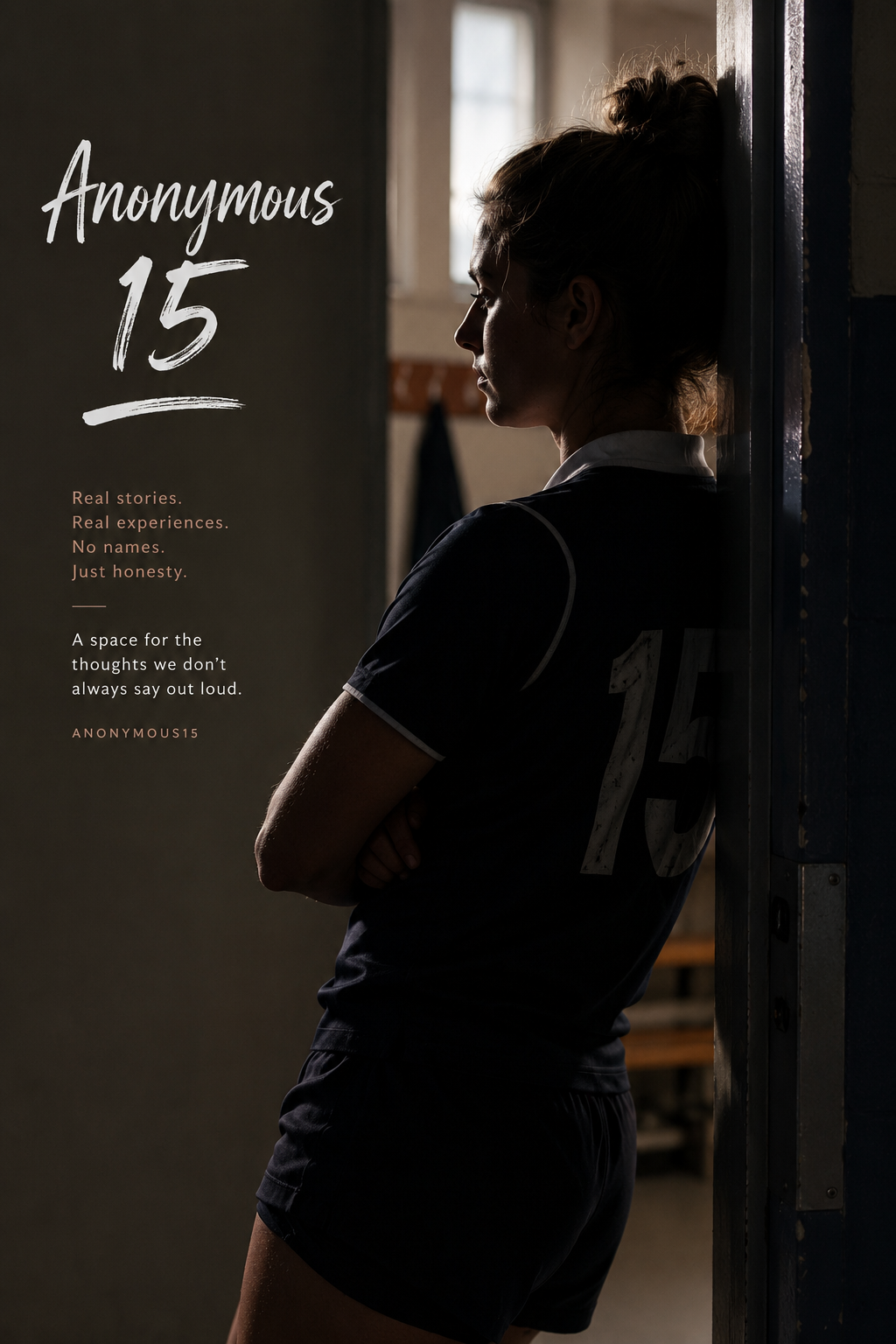
Anonymous 15
Every changing room has stories that never leave it. Anonymous 15 is where they do.
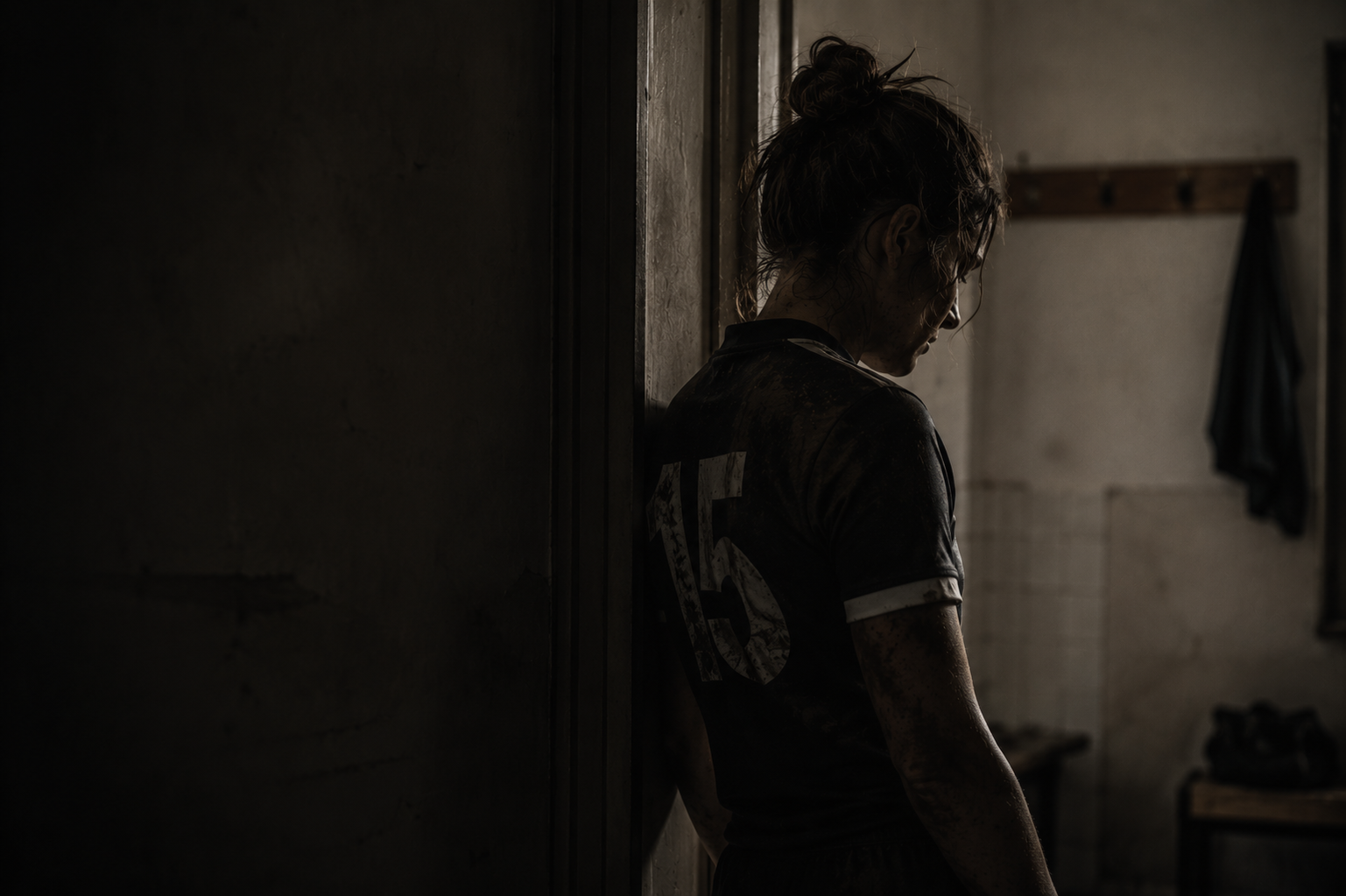
Column No. 1
Anonymous 15 has played rugby long enough to know better. The bag is already by the front door.
There is something specific about a rugby kit bag on a Tuesday night in November. Not the bag itself — the bag is irrelevant. It doesn't matter if it's a battered duffel with a broken zip or something expensive you bought during a brief period of optimism. What matters is the interior ecosystem, which is always, without exception, identical.
Top layer: the clothes you wore to work, folded with unreasonable neatness. Below that: a stud wrench for boots you no longer own. Three half-unrolled strips of sock tape, grey with lint. A sports bra that lost its elasticity somewhere around 2021 but has retained every memory of a rain-soaked away fixture you'd rather forget. And at the very bottom, beneath the loose ibuprofen and a banana that has been in there since September: the smell. Deep heat and damp turf and cold changing rooms and something that might generously be described as unwashed pride.
We carry our lives in these bags.
Nobody made us do this. We chose it. After a forty-hour week, against all available evidence that it was a reasonable idea, we chose it.
That's probably the first thing you should know about me.
I'm not going to tell you who I am. That's the point.
I could play for your club. I could play against your club. I could be standing next to you every Tuesday night, eating that banana I should have thrown away in September.
What I will tell you is this: I've been around rugby long enough to have seen things. Good things, strange things, things that should never have happened at an away fixture in Coventry. I've seen players retire so many times that nobody bothers saying goodbye anymore. I've seen friendships survive injuries, bad selections, heavy defeats and committee meetings — particularly committee meetings.
The game changes. The people don't.
Every club has these stories. Every team has them. Every player has a few they'd rather nobody found out about.
Those are the ones we'll be talking about.
See you next issue.
— Anonymous 15
“Anonymous 15 is a fictional character. Or is she?”
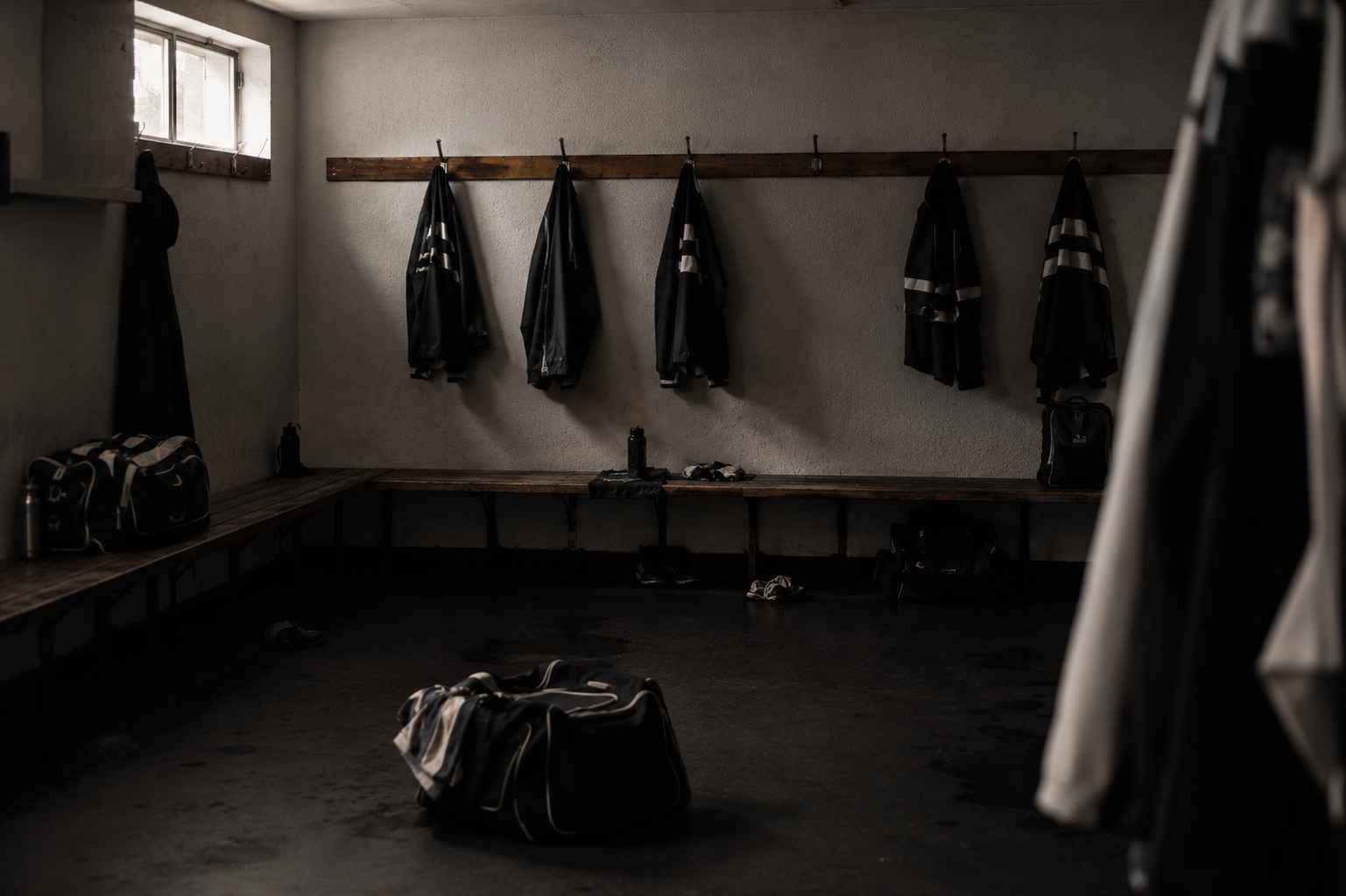
The Clock’s In The Red.
Gilbert's Rugby Truths. Gilbert's Player Types. And your stories — we want to hear them.
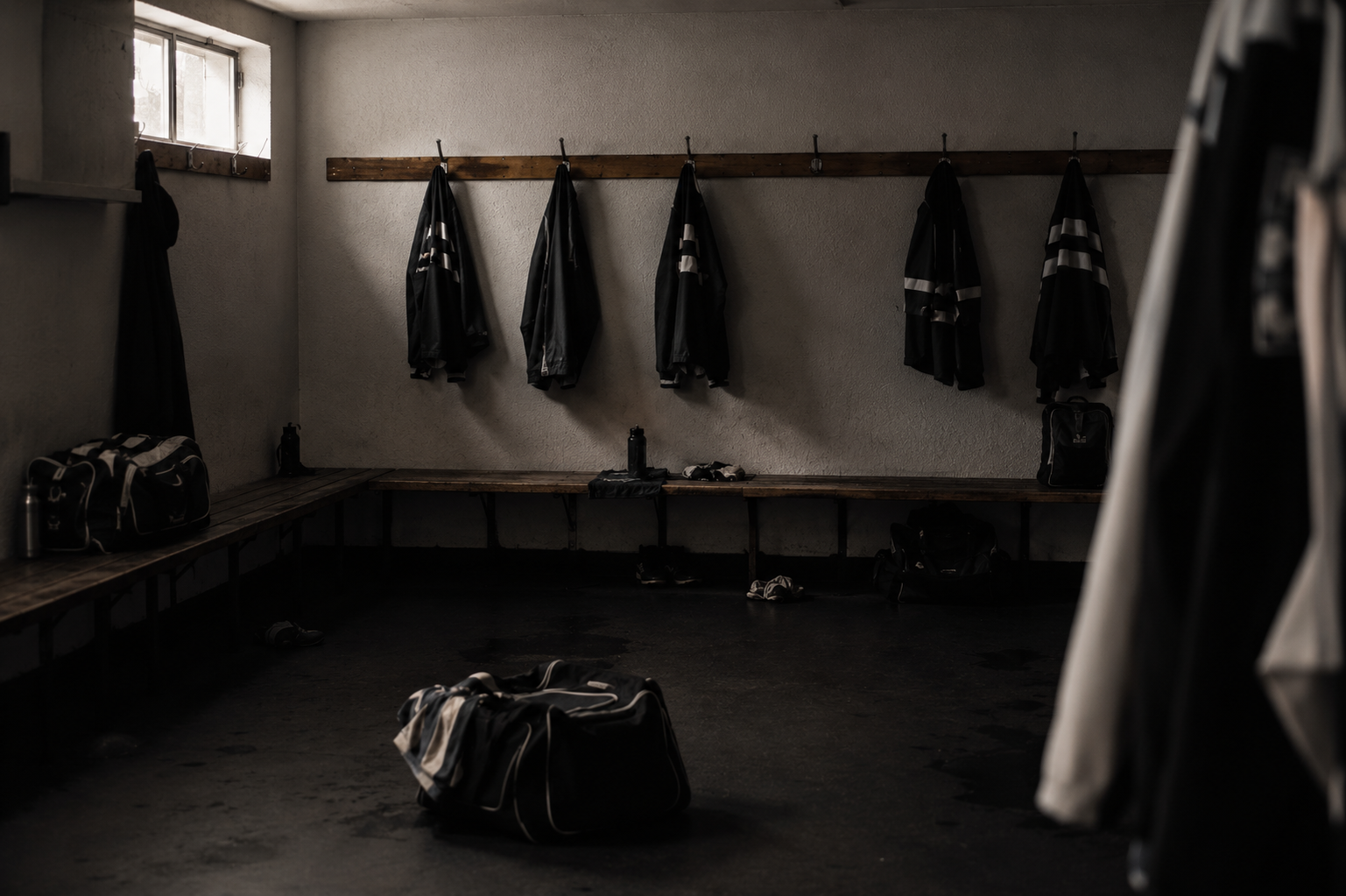
“The final whistle doesn’t end the conversation.
Notes, truths and observations from across women’s rugby.”
Gilbert's Rugby Truths
Nobody has ever left a post-match meal saying it went on too long.
The coach who says "keep it simple" has a whiteboard covered in arrows.
Gilbert's Player Types
The Eternal Vice Captain
Never quite captain
Runs every warm-up.
Organises the tour.
Knows where the kit is.
Will be vice captain forever.
Completely fine about it.
(Not fine about it.)
Send Us Your Stories
Your Club Hero. Your worst kit bag discovery. Your best post-match chip shop. Your most chaotic training session. Letters to Gilbert.

Support XV Style
No paywall. No premium tier. No pressure. Just the occasional coffee to help keep the lights on and the articles coming.

“Apparently I’m supposed to thank people.”

And Finally…
And finally…
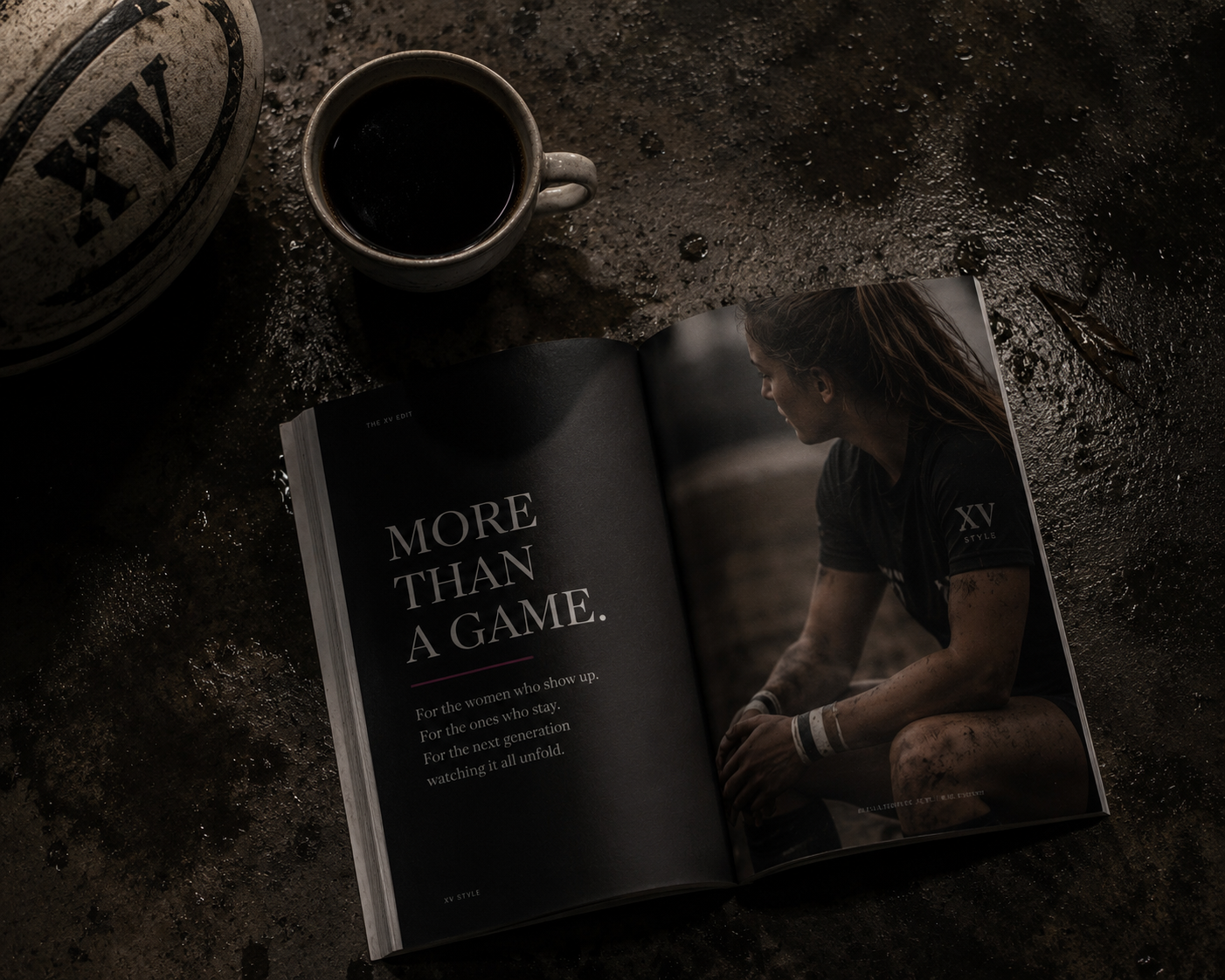
Issue 02 — The More Than Matchday Edition
We hope this issue gave you something to think about, something to recognise, and something that felt like it was written for you.
Something that made you smile. Or stayed with you afterwards.
If it did, we achieved what we set out to do.
Because XV Style has always been about the stuff that doesn't make the match report.
Coming in Issue 03: The Club Hero Edition
Every club has one. You know exactly who we're talking about.