
Talking Rugby
Eight. And Counting.
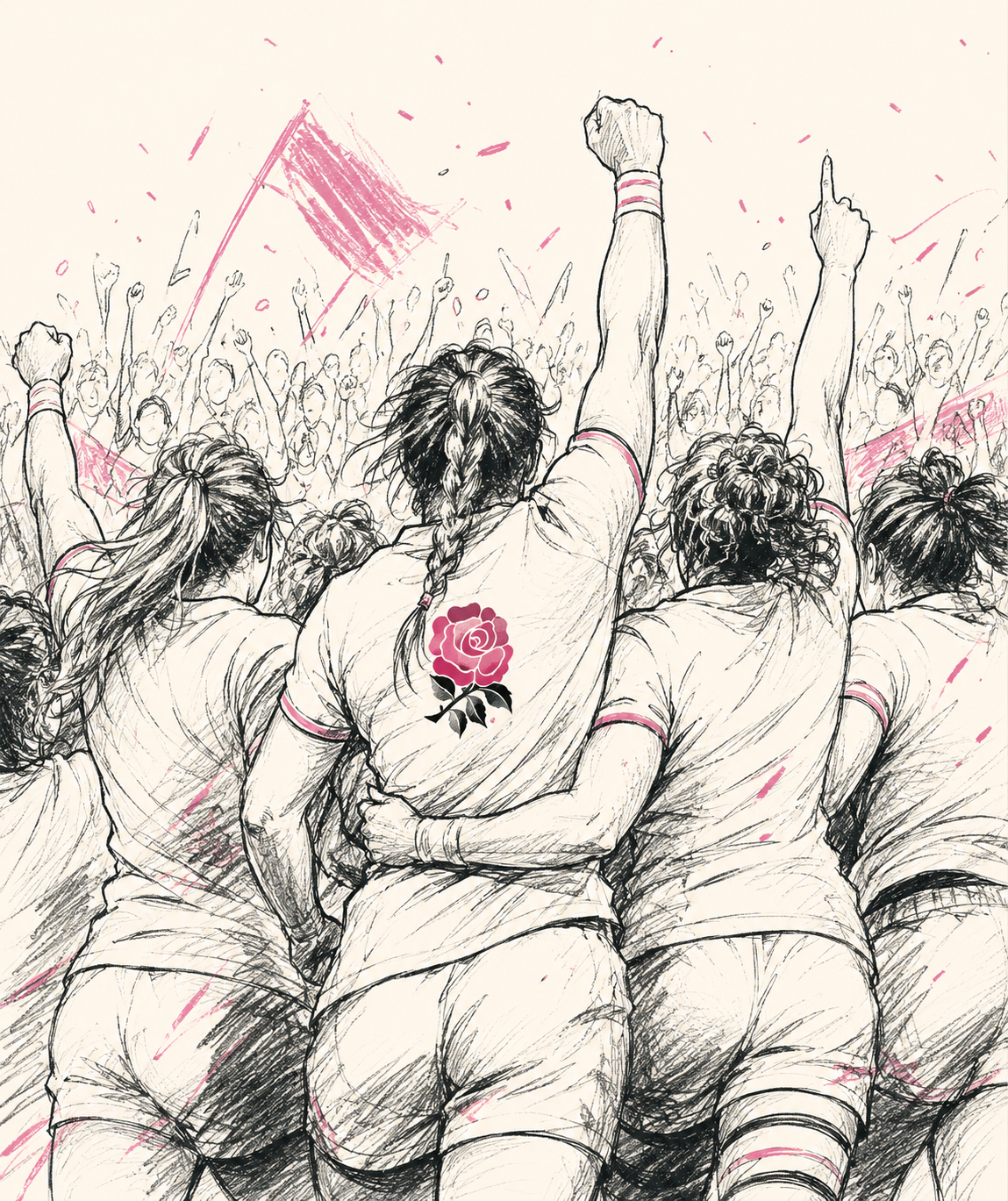
“The 2026 Women’s Six Nations wasn’t just another England title. It was proof that something fundamental has changed about this sport. And this time, the whole world was watching.”
The Numbers That Changed Everything
There is a moment, somewhere in the middle of a sporting revolution, when the numbers stop being statistics and start being statements
.
The 2026 Women's Six Nations was full of those moments.
77,120 people filed into Allianz Stadium in Twickenham for England against Ireland on the opening weekend. Not a sold-out final. Not a World Cup decider. Round One. The first Saturday in April. And still, 77,120 people came.
That figure shattered the previous Women's Six Nations attendance record by more than 18,000. It wasn't a small increase. It wasn't incremental growth. It was a signal.
By the time the tournament ended five weeks later, the 2026 Women's Six Nations had averaged 18,000 fans per game — an 84% increase on 2025. Total attendance across the championship reached 194,466, surpassing the previous full tournament record before the final round had even been played.
For the first time in their history, both Ireland and Scotland broke the 30,000 fan ceiling. Murrayfield hosted its first Women's Six Nations match and 30,498 turned up — a national record for a standalone women's sporting event in Scotland, breaking a record set by the Scotland women's football team just seven years ago. In Dublin, the Aviva Stadium opened its doors to Irish women's rugby for the first time. They came in their thousands.
Five nations set national or tournament attendance records during a single championship.
This is not a niche sport finding its feet. This is a sport arriving.
The Team Behind The Title
England won their eighth consecutive Women's Six Nations title. Their fifth Grand Slam in a row. Their 38th consecutive match without defeat.
At some point the records become almost impossible to contextualise. So instead of more numbers, consider the people behind them.
Consider Amy Cokayne. The Sale hooker — RAF background, ferocious work rate, the kind of player who seems to find turnovers the way other people find loose change — was at the heart of everything England did in 2026. Six tries, the second highest tally in the entire championship. Seven turnovers, joint highest of any player in the tournament. And a lineout completion rate of 97.9% — the highest of any hooker in the competition. That last figure is almost offensive. In a tournament where set piece accuracy can decide matches, Cokayne was operating at a level that made the lineout look easy.
It wasn't easy. It never is.
Then there is Zoe Harrison. The Saracens fly-half kicked at 94% accuracy across the tournament — a figure that reflects not just technical skill but composure under pressure. When England needed points, she delivered them. When England needed field position, she found it. The quiet engine in a team of visible stars.
And Ellie Kildunne. Still unstoppable. Still the player on the cover of Issue 01. Still the first name opposition coaches write on their tactical whiteboards.
Bordeaux. That First Half.
There are matches that reveal something true about a team. The Grand Slam decider in Bordeaux on May 17th was one of them.
France had prepared carefully and deliberately. Head coach François Ratier made just two changes to his starting XV, prioritising cohesion and familiarity. England, by contrast, made seven alterations — some enforced by injury, some tactical. On paper, before kick-off, France had the more settled team. They had home advantage. They had a crowd behind them. They had everything except the habit of winning.
The opening ten minutes belonged to France.
England were ill-disciplined, conceding territory and inviting pressure. France found space out wide through the blistering pace of winger Léa Murie. When loosehead Ambre Mwayembe stripped the ball cleanly from Mackenzie Carson in the English 22, Murie broke clear and timed her inside pass perfectly for scrum-half Pauline Bourdon Sansus to coast under the posts. Carla Arbez converted. France led 7-0.
In a Bordeaux crowd of thousands, it must have felt like a beginning.
England had other ideas.
What followed in the next thirty minutes was a masterclass in the clinical efficiency that has made this team almost impossible to beat. England didn't panic. They didn't restructure. They simply waited for France to give them something, and when France did, they took it.
First it was a heavy midfield exchange that gave Amy Cokayne the platform to drag England to the line, before Sarah Bern showed the full force of her considerable self to crash over. Harrison converted. 7-7.
Then France made an unforced handling error in midfield — the kind of mistake that changes matches. Claudia Moloney-MacDonald and Megan Jones hacked the bouncing ball forward into space and Ellie Kildunne gathered cleanly and touched down under the posts. England led 14-7 and France, despite their composure, had not yet worked out how to stop it.
With the half closing in, England won a scrum penalty deep in French territory. Their rolling maul was halted but England had the presence of mind to shift the ball wide, and Jess Breach — as she so often does — finished in the corner under pressure. Harrison's conversion from the touchline was marvellous. 21-7.
Then, in the final play before half time, Helena Rowland found Kildunne with a long miss-pass that dissected the French defence. Her second of the afternoon. Her composure in taking it as if time had slowed down around her.
England went in at half time leading 26-7.
They had been behind. They had been under pressure. They had been in France, in front of a crowd that desperately wanted a different outcome.
And they had scored four tries in thirty minutes.
More Than The Red Roses
This is an England story. Of course it is. Eight titles in a row demands to be told.
But the 2026 Women's Six Nations was also something else — a tournament in which the whole competition grew.
Ireland broke records at the Aviva Stadium. Scotland broke records at Murrayfield. France pushed England to the edge of a Grand Slam in Bordeaux in a match that finished 43-28 but felt closer than that for long periods. Wales drew 500,000 viewers on BBC Two for their match against England — a national record.
The competition is not just England and the rest. It is becoming something richer, something more contested, something that can fill the Aviva for the first time and sell out Murrayfield and send 77,120 people to Twickenham on an April afternoon.
The game is changing. It has been changing for years.
In 2026, it changed in front of more people than ever before.